
Agricotech · · 5 min read
Maize farming in Rwanda: a practical guide to checking crop growth
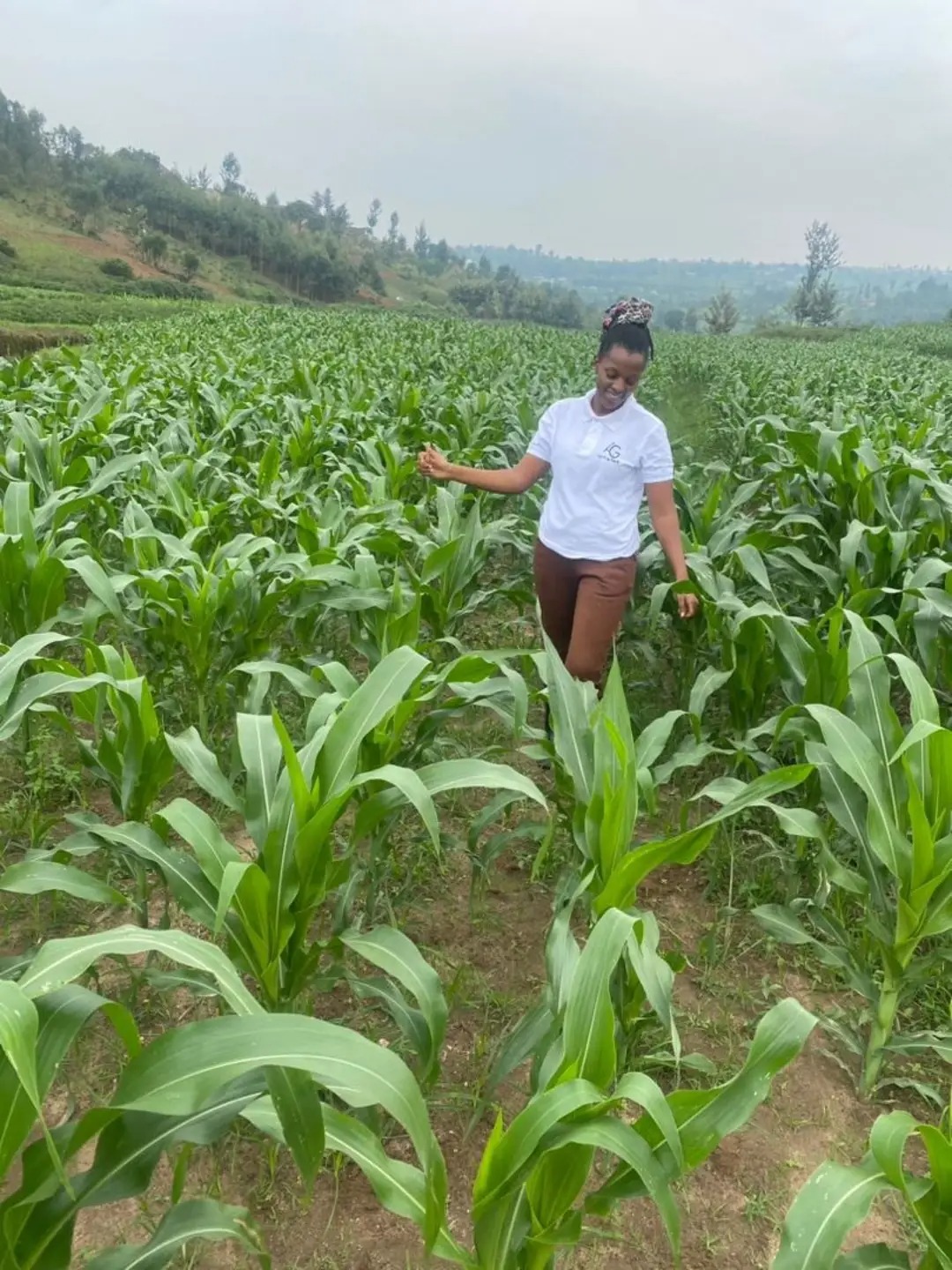
A maize field can look green and healthy from the road while still containing patches that need attention. Walking through the crop, looking at several plants and writing down what you find gives a much clearer picture. This guide explains a practical observation routine for farmers in Rwanda without prescribing one planting calendar, fertilizer rate or treatment for every farm.
The photograph supplied by Agricotech shows a person standing among maize plants. It introduces the subject of field observation; it does not establish the variety, planting date, yield or treatment history of the crop pictured. Those details need farm records, not guesses from an image.
Start with the history of the field
Before judging the plants, write down what you know: the planting date, seed source, recent rainfall, previous crop and any work already done. If a detail is unknown, leave a space rather than filling it with an estimate. These notes make it easier to compare visits and help an adviser understand what happened before a symptom appeared.
Different fields do not necessarily develop at the same speed. Temperature, water availability, soil conditions and variety affect crop growth. Avoid concluding that a field is failing simply because another farmer has taller plants. Compare your own crop over time and consider whether most plants are progressing together.
Recognise the main phases of maize growth
Maize first develops leaves and roots during vegetative growth. Later, tassels and silks appear, pollination takes place and kernels develop. Knowing the broad phase helps you describe the crop accurately. A field with developing grain has different immediate concerns from one where seedlings are just emerging.
Agricultural guides often describe vegetative stages by counting leaves with visible collars, the band where the leaf blade meets its sheath. This is more useful than counting every partly opened leaf at the top of a plant. If you are learning the method, ask an agronomist to demonstrate it on a real plant and record the stage using the same method on later visits.
Walk beyond the field entrance
Check more than the easiest row to reach. Visit several points across the field, including a representative interior area and any patches that look different. Inspect boundaries separately because shade, foot traffic or runoff can make them unlike the rest of the crop. Stay on suitable paths where possible and avoid damaging roots or knocking plants over.
At each point, look at overall stand, leaf appearance, weed competition and soil conditions. Are gaps scattered or concentrated? Are some plants wilting while others nearby look normal? Does the problem follow a wet area, slope or row? Patterns are often more helpful than one close-up photograph of a damaged leaf.
Observe symptoms without guessing their cause
Yellowing, poor growth and damaged leaves can have several causes. A colour change alone does not prove a nutrient deficiency, and a hole in a leaf does not identify the insect responsible. Check whether damage is recent, whether insects are present and whether the same symptom occurs at several observation points.
Take both a wide photograph of the affected area and a close photograph of the plant. Record the date, where the problem appears and how many inspected plants show it. Share these observations with a qualified local adviser before buying inputs. This approach helps avoid spending money on a treatment that does not address the actual cause.
Pay attention around flowering
Flowering and early grain development are important times to observe water stress and crop condition. FAO crop guidance explains that maize is sensitive to water shortages, particularly around flowering. This does not mean every wilted plant needs the same irrigation response: water access, drainage, weather and soil all matter.
Look for changes across repeated visits rather than treating one midday observation as the whole story. Report persistent wilting, unusual flowering patterns or substantial damage promptly. Do not promise a harvest size from plant height or the appearance of one cob; yield assessment requires a representative method and the crop still has to complete development.
A useful field notebook checklist
- Date, field location and recent weather.
- Planting date and known seed details.
- Crop phase and several observation locations.
- Gaps, weeds, wilting or visible damage.
- Photographs and questions for an adviser.
- Agreed next step and date to check again.
Keeping the same simple checklist makes changes visible. A short, accurate record is more valuable than a long account based on memory. Bring your notes when seeking advice and keep any recommendations with the field history for future seasons.
Further reading
FAO: Maize crop information explains crop development and water requirements. NDSU Extension: Corn growth and management quick guide provides growth-stage background. Their general principles support observation; local planting dates and input decisions still require Rwanda-specific advice.