
Agricotech · · 5 min read
Maize field scouting: how a farming team can spot problems earlier
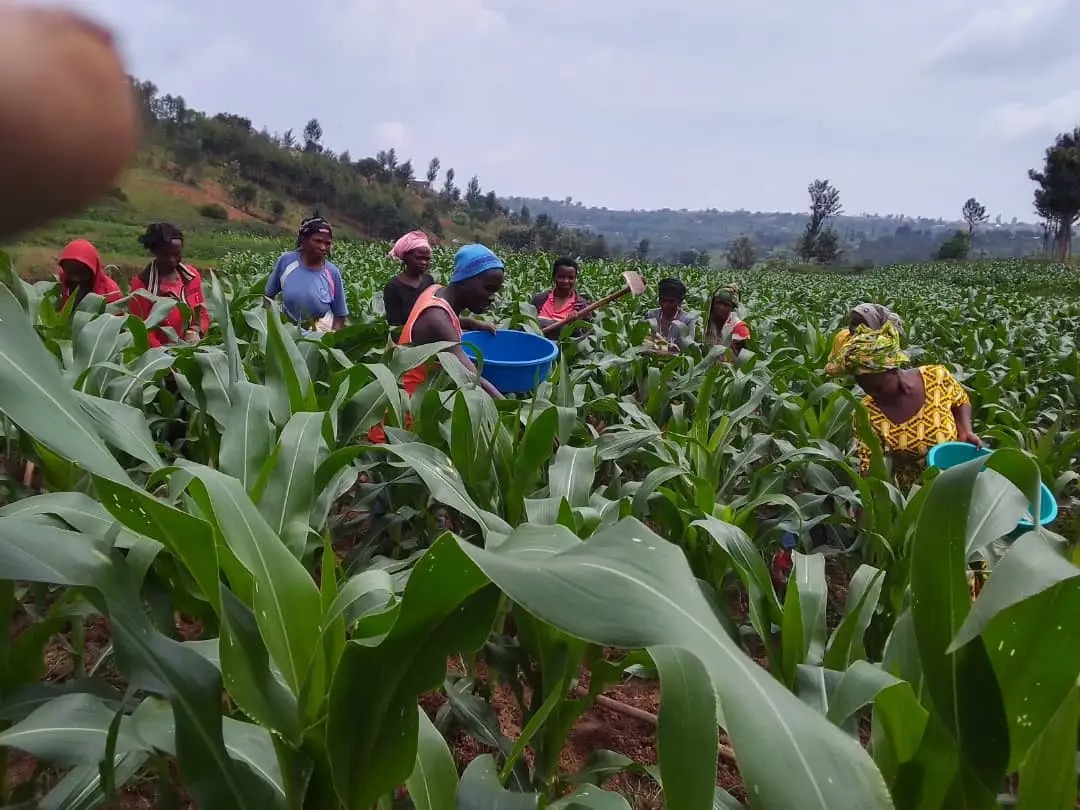
Good field scouting means looking carefully, recording what you see and deciding whether a problem needs further investigation. Working as a team can make that routine easier, but only if everyone observes and records in a consistent way. The aim is not to find a reason to spray. It is to understand crop condition early enough to make a sensible decision.
Agricotech supplied the photograph of people working among maize plants. The photograph provides a real farming context for this article. It cannot tell us which pests were present, what work was planned or whether the field needed any treatment. The routine below is general guidance rather than a report of actions taken in that field.
Agree on the purpose before entering the crop
Start with a short conversation. Are you checking emergence, weed pressure, leaf damage, flowering or an area that looked unusual last time? Agree on which observations to record and how to describe them. If one person calls every damaged leaf severe while another records only dying plants, the notes will not support a useful comparison.
Give each person a clear role. One can observe plants, another can record counts and locations, and a third can photograph representative symptoms. A small team can combine these tasks. The important point is to collect observations deliberately rather than rely on several people remembering different parts of the visit.
Choose representative observation points
Look across the field rather than stopping only where a problem is most obvious. Check several interior areas and inspect unusual patches separately. A boundary beside a road, a shaded corner and a waterlogged section may tell different stories. Record those differences instead of combining every observation into one average impression.
Where practical, use a repeatable route that covers different parts of the crop. Avoid repeatedly trampling the same plants. For larger or irregular fields, sketch the field and label the observation points. The drawing does not need to be a survey map; it simply needs to help the next visitor find the same area.
Record what is present, not just what is missing
Describe healthy plants as well as damaged ones. Comparing them can reveal whether symptoms are widespread or confined to a patch. Note whether damage affects older or newer leaves, whether plants are wilting and whether weeds are competing strongly. Check for insects or other visible evidence without assuming that every insect is a pest.
Use counts that explain their own meaning. For example, a note saying that four of twenty inspected plants had fresh leaf damage is clearer than a note saying there was some damage. Such a count is an observation at that location, not automatically an estimate for the whole field. Record how plants were selected and ask an adviser about appropriate sampling methods if a management decision depends on the result.
Do not turn every symptom into a diagnosis
Similar symptoms can result from different causes. Poor growth may involve soil conditions, water, nutrition, weeds, disease or planting problems. Scouting records narrow the questions; they do not always provide the answer. Photograph the whole plant, the affected part and the surrounding area so an adviser can see the context.
Before any pesticide decision, obtain a reliable identification and consider whether intervention is justified. Local recommendations, pest levels, crop stage and registered product labels matter. Never use a product simply because a neighbouring farmer used it, and do not copy a dose from a general internet article.
Make the next step visible
Finish the visit by agreeing on a small action list. It may include asking an agronomist to inspect a patch, checking drainage, improving a field record or returning to observe whether damage is increasing. Assign responsibility and a review date. Without this step, a notebook can fill with observations that never lead to follow-up.
For a developing crop, a regular weekly check can provide a useful starting routine, with more frequent attention when weather or a known problem requires it. The schedule should fit field conditions and local advice. Keep records from quiet visits too: knowing when the crop looked normal helps identify when a change began.
Keep the team safe
Confirm whether any recent treatment creates a restricted-entry period before sending people into the field. Follow the applicable product label and trained operator guidance. Carry drinking water separately from chemicals, protect yourself from sun and avoid entering areas where spraying is taking place. Children should not be involved in pesticide handling or exposed to application work.
A successful visit ends with better information, not necessarily a purchase. Over time, a consistent scouting routine helps a farming group explain problems more clearly, organise work and avoid repeating decisions based on incomplete information.
Further reading
APNI: Maize crop scout pocket guide offers a structured observation reference. Iowa State University: Crop scouting basics explains sampling and field observation. Use these principles alongside local agronomic advice; they are not Rwanda-specific treatment prescriptions.