
Agricotech · · 5 min read
Knapsack sprayer safety: checks before, during and after field work
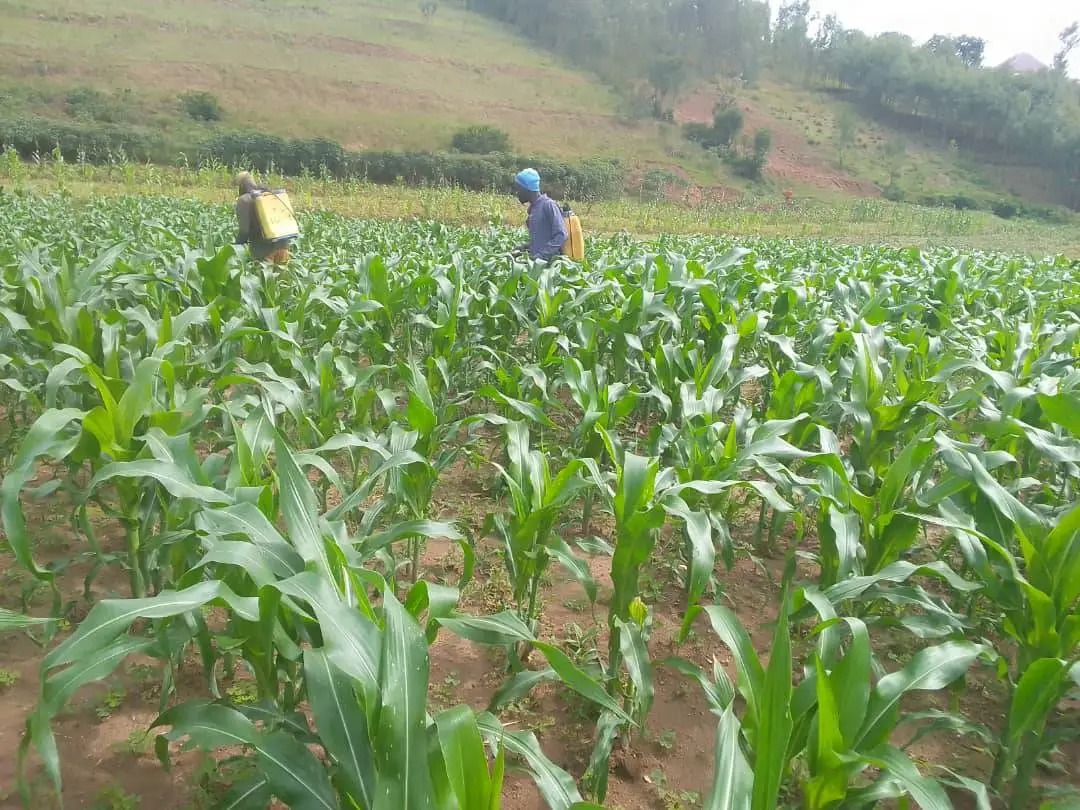
A knapsack sprayer is a tool, not a complete crop-protection plan. Before using one, a farmer needs to know what problem is being addressed, whether a treatment is necessary and whether the equipment and operator are ready. Careful preparation reduces avoidable exposure to the person spraying, other people nearby and the surrounding environment.
The supplied photograph shows people using sprayers in a maize field. The contents of the sprayers, label instructions, training and protective equipment cannot be confirmed from the photograph. It is not an endorsement of the clothing or spraying technique pictured. This article describes safety checks that should be considered independently of the image.
First ask whether spraying is needed
Identify the problem before selecting a product. Insect damage, weeds and plant disease require different responses, and some symptoms are not caused by a pest at all. Seek qualified local advice when the cause is uncertain. Consider non-chemical measures where appropriate and use only products authorised for the intended crop and purpose in Rwanda.
This guide does not recommend a pesticide, mixing rate or spraying schedule. Those decisions depend on the current product label, local registration, crop condition and trained advice. Never substitute a stronger mixture for a proper diagnosis, and never assume that a product sold for one crop is suitable for another.
Read the label before opening the container
The label sets out permitted uses, mixing instructions, protective equipment, precautions, first aid and any restricted-entry or pre-harvest interval. A restricted-entry interval concerns when people may return to the treated area; a pre-harvest interval concerns the time before harvesting. They are different requirements and neither should be guessed.
If instructions are missing, unreadable or not understood, do not proceed. Ask the supplier or a qualified adviser for help. Keep the original labelled container and do not transfer chemicals into drink bottles or food containers. Store products securely away from children, food and animal feed.
Inspect the sprayer with clean water
Before handling a chemical, inspect straps, tank, lid, hoses, seals, lance and nozzle. A leaking sprayer can contaminate the operator even when the application appears normal. Check operation with clean water in a suitable place, following the equipment manual, and repair faults before use.
Application equipment also needs correct calibration. The amount delivered depends on nozzle, pressure, walking speed and other factors. Ask a trained person to help you calibrate it rather than adjusting a pesticide concentration by guesswork. Never clear a blocked nozzle with your mouth. Follow the manual and use an appropriate cleaning method without exposing yourself to residues.
Wear the protection required for the task
Use the protective equipment specified by the product label for mixing, loading, applying and cleaning. Suitable chemical-resistant gloves, protective clothing, footwear, eye protection and, where required, appropriate respiratory protection are not interchangeable with ordinary household items. A cloth face covering is not a substitute for required respiratory protection.
Check that protection fits and is in good condition. Heat can make protective clothing uncomfortable, but removing required protection is not a safe solution. Plan rest, drinking water and work timing with exposure precautions in mind. Stop if safe working conditions cannot be maintained.
Protect other people and nearby water
Keep children, bystanders and animals away from mixing and application areas. Consider nearby homes, footpaths, neighbouring crops and water sources. Follow label restrictions and avoid conditions that allow spray to drift beyond the intended area. Strong wind or unsuitable weather is a reason to postpone, not to rush.
Do not eat, drink or smoke while handling chemicals. Avoid touching your face with contaminated gloves. Keep wash water and emergency information accessible, and ensure another responsible adult knows where the work is taking place. If exposure or illness occurs, stop work, follow label first-aid instructions and seek medical help promptly. Bring the label or its details for the clinician; do not improvise treatments.
Cleaning and storage are part of the job
After work, clean equipment according to the label and manual without contaminating streams, wells or household areas. Follow local arrangements for leftover mixtures and empty containers. Never reuse pesticide containers for food, water or household storage and never assume that rinsing makes them safe for another purpose.
Remove protective items carefully, wash yourself and handle work clothing separately from family laundry in line with product guidance. Record the date, field, product, application details and relevant waiting periods. Store the cleaned equipment safely and mark any fault that must be repaired before the next use.
A final safety check
- Confirm the problem and approved use.
- Read and understand the label.
- Check equipment and calibration.
- Use the required protection.
- Keep people and water sources protected.
- Record the work and observe waiting periods.
Further reading
WHO and FAO: Guidelines for personal protection when handling and applying pesticides provide safety background. FAO: Minimum requirements for agricultural pesticide application equipment covers equipment principles. Product labels and trained local guidance govern the actual operation.