
Agricotech · · 5 min read
Carrot harvesting and handling: protecting quality from field to pickup
A carrot can be grown well and still lose quality between the field and the customer. Rough digging, time in the sun, dirty containers and crushing during transport can all undermine the effort invested in the crop. Planning harvest and handling together helps protect the roots that actually reach the market.
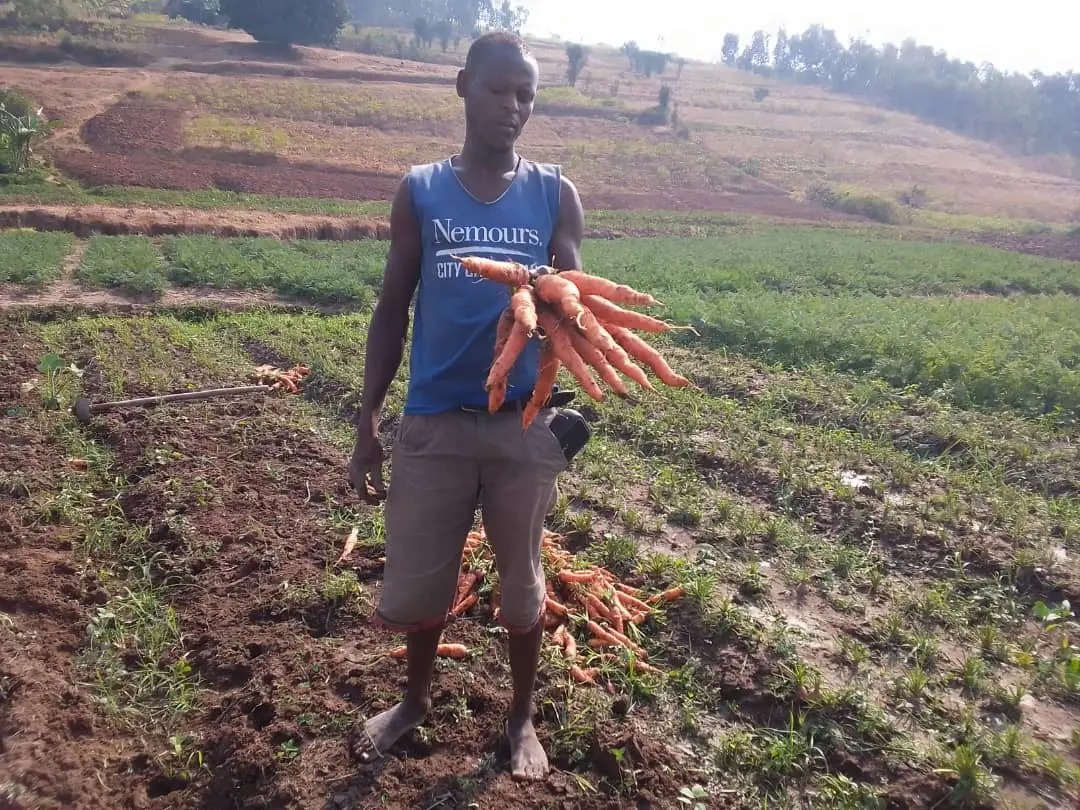
Agricotech supplied the photograph of a person holding harvested carrots. It shows the crop relevant to this article, but it does not prove a variety, harvest date, certification or storage condition. The advice below explains general handling principles rather than making claims about the particular carrots pictured.
Decide what the buyer needs before harvesting
Ask about the preferred size, whether tops are required and whether the carrots should be washed. Requirements differ between household buyers, shops and other customers. Agreeing on them in advance avoids unnecessary handling and reduces the chance of harvesting a batch that does not suit its intended buyer.
Check sample roots from more than one part of the field. Calendar age alone is not enough to judge market readiness because variety and growing conditions affect development. Look at root size, shape and condition. If you need variety-specific harvest guidance, obtain it from a reliable seed source or local agronomist rather than assuming every carrot crop follows the same timetable.
Loosen the soil and lift gently
Carrot roots can break when pulled from hard soil without care. Use a suitable tool to loosen the soil beside the roots, keeping the blade away from the crop. Lift gently and avoid throwing carrots into a heap. Cuts, cracks and bruises reduce market quality and can make deterioration more likely during storage.
Organise work so harvested carrots move promptly to a shaded handling area. Shade helps limit heating, but it does not replace proper cooling or make damaged produce safe. Do not leave roots on a hot road or against a sun-heated vehicle while waiting for containers or transport to arrive.
Sort while problems are easy to see
Separate sound roots from badly damaged, decayed or otherwise unsuitable ones. Do not hide poor-quality carrots underneath better ones. Consistent sorting gives buyers a clearer expectation and prevents unnecessary handling of roots that should not be sold with the main batch.
Record the approximate quantity and the destination of each lot. Simple identification, such as the field and harvest date on a clean label or record sheet, helps answer questions later. It also makes it easier to compare which handling steps worked well and where losses occurred.
Handle washing as a hygiene decision
Washing can remove soil, but contaminated water can spread contamination through a batch. Use water of suitable hygienic quality and clean handling surfaces. Do not wash produce in a stream, drainage channel or container that previously held chemicals. If safe water and clean handling are not available, seek guidance rather than assuming that visible cleanliness proves food safety.
Follow buyer and local hygiene requirements for trimming and washing. When preparing washed carrots, avoid leaving them sitting in dirty water or packaging them in a way that traps avoidable moisture. For commercial operations, obtain specific advice on water management and cleaning procedures; a general blog is not a food-safety system.
Use containers that protect the roots
Choose clean food-appropriate containers with no sharp edges or chemical residues. Avoid excessive compression and rough loading. A container should protect the carrots during lifting and transport, not merely hold as many as possible. Keep produce separate from fuel, pesticides, animal waste and other contamination sources.
Plan vehicle loading so heavier items do not crush the roots. Limit unnecessary unloading and repacking. If refrigeration is available, seek crop-specific guidance and maintain the planned cold chain. Without it, focus on shade, short delays and prompt delivery; do not promise a fixed shelf life because temperature and handling conditions vary.
Coordinate transport and pickup
Confirm where the buyer will collect the order and when someone will be available. For Agricotech customers, collection is at the office or an agreed local pickup point. A clear arrangement reduces time spent waiting with harvested produce and helps the buyer plan suitable transport after collection.
Share an accurate description of the batch and do not invent availability or quality claims. If a delay or quality problem changes what can be supplied, communicate before the buyer travels. Honest information is part of good handling because it allows a suitable decision while the produce is still useful.
Keep a short harvest record
- Field or lot identification and harvest date.
- Buyer requirements and intended destination.
- Sorting decisions and visible damage.
- Washing and container arrangements.
- Transport, pickup time and any delay.
These records need not be complicated. Their purpose is to improve the next harvest and make each handover clearer. Protecting quality is a chain of small decisions, and the weakest step can affect the whole batch.
Further reading
UC Davis Postharvest Research and Extension Center: Carrot produce facts describes carrot quality and storage principles. FAO: Small-scale postharvest handling practices provides practical background on harvesting and handling. Match commercial procedures to local food-safety advice.